Grow Bigger Sweeter Carrots With These
Grow Bigger, Sweeter Carrots With These Tips
Carrots are a delicious and nutritious vegetable that can be grown in most gardens. But did you know that there are a few things you can do to grow bigger, sweeter carrots?
In this blog post, we will share some tips on how to grow the best carrots possible. We will cover everything from choosing the right variety of carrot to planting and harvesting.
So whether you are a beginner gardener or a seasoned pro, read on for some helpful tips on growing bigger, sweeter carrots.
Choosing the Right Variety
The first step to growing big, sweet carrots is to choose the right variety. There are many different varieties of carrots available, so it is important to choose one that is suited to your climate and growing conditions.
Some factors to consider when choosing a carrot variety include:
- Root color: Carrots come in a variety of colors, including orange, yellow, white, and purple. The color of the carrot does not affect the flavor, so choose a color that you like.
- Root shape: Carrots can be round, tapered, or cylindrical. The shape of the carrot does not affect the flavor, so choose a shape that you like.
- Maturity date: Carrots mature at different times, so choose a variety that will mature in time for your harvest.
- Hardiness: Some carrot varieties are more hardy than others. If you live in a cold climate, choose a hardy variety that will survive the winter.
Planting Carrots
Once you have chosen the right variety of carrot, it is time to plant them. Carrots should be planted in loose, well-drained soil. The soil should be at least 6 inches deep, so that the carrots have room to grow.
Carrots should be planted in full sun. They will also tolerate partial shade, but they will not grow as large or as sweet in the shade.
Carrots can be planted in the spring or fall. If you live in a warm climate, you can plant carrots in the summer as well.
Carrot Growing Tips
Here are some additional tips for growing big, sweet carrots:
- Water regularly. Carrots need consistent moisture to grow well. Water them deeply and regularly, especially during hot, dry weather.
- Fertilize lightly. Carrots do not need a lot of fertilizer. A light application of compost or manure in the spring will help them grow.
- Thin the seedlings. Carrot seedlings are very small, so it is important to thin them out after they have germinated. This will give the remaining seedlings enough room to grow large and sweet.
- Mulch. Mulching around your carrots will help to keep the soil moist and suppress weeds.
- Harvest when they are ready. Carrots are ready to harvest when they are about 2 inches in diameter. If you harvest them too early, they will be tough and tasteless.
Harvesting Carrots
Carrots are easy to harvest. Simply use a garden fork or shovel to loosen the soil around the carrots, then gently pull them out.
Once you have harvested your carrots, you can store them in the refrigerator for up to two weeks.
Conclusion
Growing big, sweet carrots is not difficult. By following these tips, you can enjoy delicious, homegrown carrots all season long.
Carrots are a delicious and nutritious vegetable that is easy to grow. But did you know that there are certain plants that can help your carrots grow even better? These are called companion plants, and they can provide a variety of benefits to carrots, such as:
- Reducing pests and diseases. Some companion plants, such as marigolds and nasturtiums, have strong scents that can repel pests such as carrot flies and aphids. Others, such as onions and garlic, can help to prevent diseases such as root rot.
- Improving soil quality. Some companion plants, such as legumes, can fix nitrogen in the soil, which can help to improve the nutrient content of the soil for carrots. Others, such as lettuce and spinach, can help to suppress weeds.
- Attracting pollinators. Some companion plants, such as chives and dill, attract pollinators such as bees and butterflies. These pollinators help to pollinate the carrot flowers, which leads to a better yield of carrots.
If you are looking for ways to improve your carrot crop, I encourage you to do some research on companion planting. There are many resources available online, such as Garden Wiki.
FAQ of good companion plants for carrots
Q: What are some good companion plants for carrots?
A: Carrots can be grown with a variety of other plants, but some of the best companions include:
- Marigolds: Marigolds help to repel pests, such as carrot flies, that can damage carrot plants. They also add color to the garden and attract beneficial insects like ladybugs and hoverflies.
- Onions: Onions and other members of the Allium family can help repel pests, such as carrot flies, that can damage carrot plants. They also have a strong scent that can help to mask the smell of carrots, which can deter carrot root flies.
- Nasturtiums: Nasturtiums are another good choice for companion plants for carrots. They help to repel pests, such as aphids and cucumber beetles, and they also add color and interest to the garden.
- Beans: Beans are legumes, which means they can help to fix nitrogen in the soil. This can benefit carrots, which are heavy feeders. Beans also provide shade for carrots, which can help to prevent them from bolting in hot weather.
- Lettuce: Lettuce is a cool-season crop that can be grown alongside carrots. It has shallow roots, so it won't compete with carrots for water and nutrients. Lettuce also helps to suppress weeds, which can be a problem for carrots.
Q: What are some plants that I should avoid planting near carrots?
A: There are a few plants that you should avoid planting near carrots, including:
- Dill: Dill is a member of the carrot family, so it can cross-pollinate with carrots and reduce their yield.
- Celery: Celery is another member of the carrot family, so it should be avoided for the same reason as dill.
- Parsnips: Parsnips have a strong scent that can attract pests, such as carrot flies. They should be avoided if you want to protect your carrots from these pests.
- Fennel: Fennel has a strong scent that can also attract pests. It should be avoided for the same reason as parsnips.
- Potatoes: Potatoes and carrots are both heavy feeders, so they can compete for nutrients. They should be avoided if you want to give your carrots the best chance of success.
Q: How far apart should I plant carrots and their companion plants?
A: The spacing requirements for carrots and their companion plants will vary depending on the specific plants involved. However, as a general rule, you should space carrots at least 2 inches apart and their companion plants at least 6 inches apart. This will give each plant enough room to grow and thrive.
Q: What are the benefits of companion planting carrots?
A: There are several benefits to companion planting carrots. For example, companion plants can help to:
- Repel pests: Some companion plants, such as marigolds and nasturtiums, can help to repel pests that can damage carrots.
- Attract beneficial insects: Other companion plants, such as beans and lettuce, can attract beneficial insects that can help to control pests.
- Improve soil health: Some companion plants, such as legumes, can help to improve soil health by fixing nitrogen.
- Provide shade: Some companion plants, such as lettuce, can provide shade for carrots, which can help to prevent them from bolting in hot weather.
Q: What are some tips for companion planting carrots?
A: Here are a few tips for companion planting carrots:
- Do your research: Before you start planting, do some research to learn about the specific companion plants that are best for carrots.
- Consider the spacing requirements: Be sure to plant carrots and their companion plants at the appropriate distances apart.
- Experiment: There is no one-size-fits-all answer when it comes to companion planting. Experiment with different combinations of plants to see what works best in your garden.
Image of good companion plants for carrots
- Carrots and beans: Beans fix nitrogen in the soil, which is beneficial for carrots. They also help to shade the soil, which can help to keep carrots cool and prevent them from bolting.

- Carrots and chives: Chives repel pests that can harm carrots, such as carrot flies. They also help to improve the flavor of carrots.
- Carrots and lettuce: Lettuce helps to suppress weeds, which can compete with carrots for nutrients. It also helps to keep the soil cool, which is beneficial for carrots.
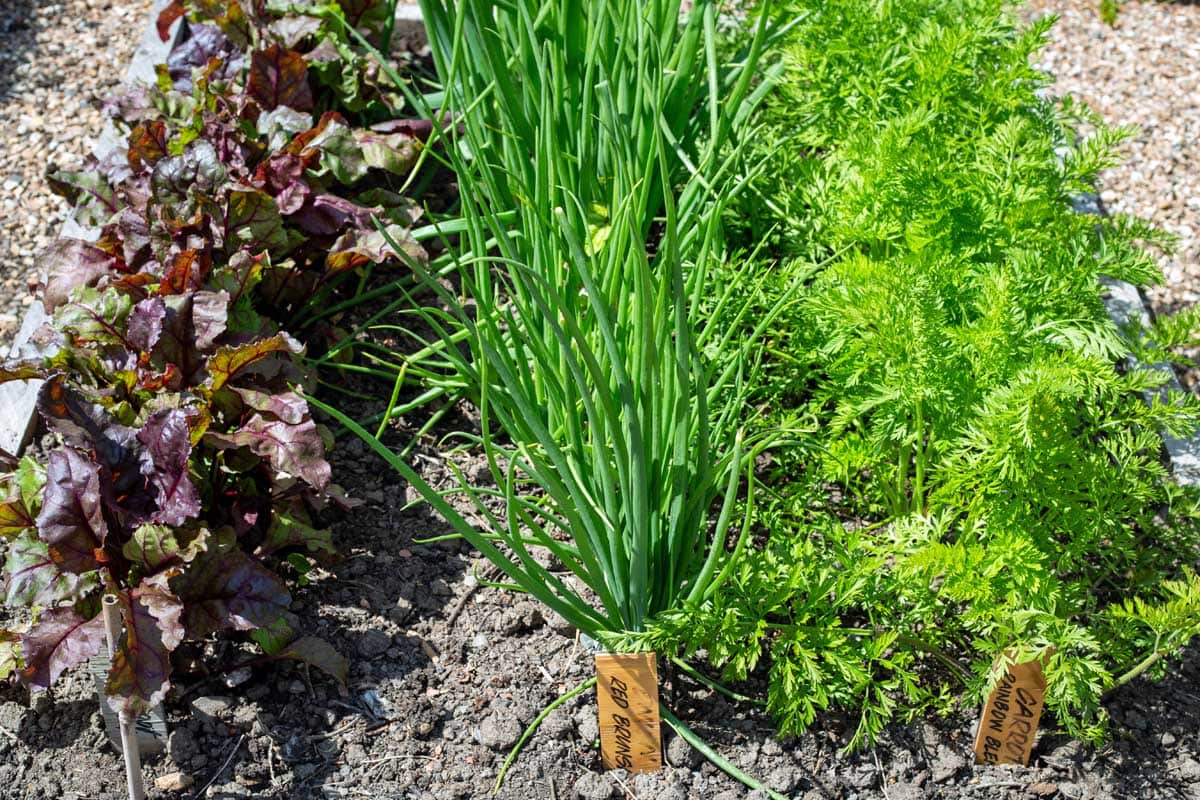
- Carrots and onions: Onions help to repel pests that can harm carrots, such as carrot flies. They also help to improve the flavor of carrots.

- Carrots and tomatoes: Tomatoes help to deter pests that can harm carrots, such as carrot root fly. They also help to improve the flavor of carrots.

Post a Comment for "Grow Bigger Sweeter Carrots With These"